|
Bitcoin Bubble

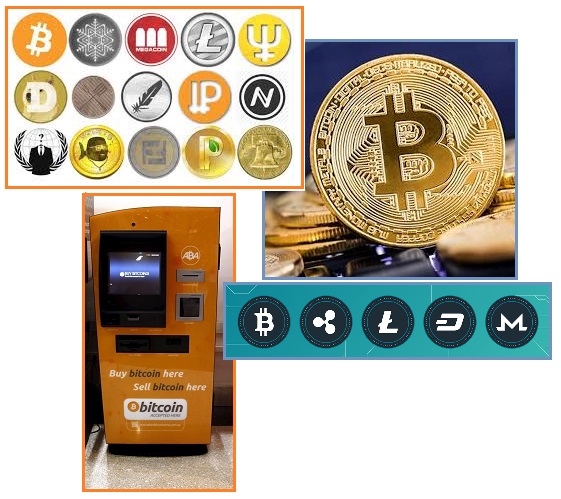
From the start, the Zetas advised that Bitcoin and other
currencies were risky. Unlike the USD cryptocurrencies are not
regulated, and if one has been injured and wants to sue, who to
sue? Deposits in US banks are insured by the US government for
$250,000 but not so for cryptocurrencies most often living in
servers in people’s basements. Poof. Gone.
ZetaTalk Confirmation
12/7/2013: Bitcoin
is a recent phenomenon wherein funds are converted from one
currency to another, and passed via the Internet. A virtual
bank, its popularity has increased because there is no
apparent physical location where the funds can become
entangled and no way for the tax man to easily trace the
funds. On the flip side, it’s virtual money, and thus can
disappear along with the Internet. Bitcoin will not outlast
the Internet, which will falter during the Pole Shift and
essentially disappear. But Bitcoin is a step closer to the
barter system than traditional banking.
The barter system, which we
have predicted will replace the paper money system, will
thrive. This will arise naturally and gradually, as mankind is
familiar with the barter system from antiquity and the worth
of the item is obvious. Banks become more particular about
loaning funds, worried about repayment, so the populace starts
to look outside of the banks. A farmer needs a new tractor and
swaps for an old truck. In all of this, where does Bitcoin
fall? This is a currency without a country to collapse into
bankruptcy, a bank with scant banker salaries as an overhead
to pay, and a currency capable of adapting to the exchange
rate almost instantaneously. As long as the Internet
functions, Bitcoin is likely to do so also.
What could go wrong? The
success of Bitcoin has inspired copycats. Cryptocurrencies
without the inherent checks and balances of Bitcoin have
emerged, and fraud and theft and bankruptcies have emerged
right behind them. Unlike national currencies, where the
government of a country stands behind the bills they print,
Bitcoin and other Cryptocurrencies have only a network of
servers that can be hacked and corrupted. A country can go
bankrupt and its currencies become almost worthless, but one
knows where to go to demand repayment. Not so for Bitcoin
which can go poof.
Cryptocurrencies have been compared to a Ponzi Scheme, as unless
more and more people are attracted to their use, they can lose
their value.
- Ponzi Schemes Explained: Legal
Definition and Key Insights
https://legal-resources.uslegalforms.com/p/ponzi
- A Ponzi scheme is a type of
investment fraud that promises high returns with little
risk to investors. Named after Charles Ponzi, who became
infamous for such schemes in the early 20th century, it
operates by using the funds from new investors to pay
returns to earlier investors. This creates the illusion of
a profitable business, but in reality, no legitimate
investment is taking place. Eventually, the scheme
collapses when it becomes impossible to recruit enough new
investors to pay returns to earlier ones.
- Market Crash
May 29, 2022
https://poleshift.ning.com/profiles/blogs/zetatalk-newsletter-as-of-may-29-2022
- How safe is your savings account
at the bank? If under $100,000 the FDIC will guarantee
these funds if your bank goes belly up. What about Bitcoin
or other cryptocurrencies? They are ephemeral and could
disappear overnight. The Zetas call the debt based system
that banks operate a Paper Promise – ephemeral.
The Zetas have predicted that bank failure will be
endemic, with the globe turning to the Barter System
instead.
ZetaTalk Confirmation
1/31/2018: Following the success of Bitcoin
to establish itself as a virtual currency, there has been a
plethora of Cryptocurrencies emerging. Fraud and bankruptcies
have followed. Are these new Cryptocurrencies safe and stable?
No, nor is Bitcoin immune from fraud or a sudden collapse
either. Paper money is backed by the country printing this
money, with the currency exchange rate showing the relative
worth and stability. If a country is faltering this can be
seen long before a crash. And there is always an accounting
eventually, where the essentially worthless paper money is
exchanged for something of worth.
But Cryptocurrencies do not
have backing from a country, and are not housed in a bank that
might be backed by a country. In the US, this is known as the
FDIC, where savings accounts are backed up to $100,000 in case
of bank failure. Who does that for Bitcoin? The worth resides
on a series of servers, owned by individuals, who invest to
establish this repository and then collect a transaction fee.
These individuals perform a series of checks and balances
against each other, to prevent blatant theft.
Most of the new Cryptocurrencies are being established to
eventually steal from the public. The schema is to allow the
currency to go into use, encouraged by celebrities or chirpy
reports on how easy the new currency is to use, then boom
anyone holding the electronic currency suddenly finds it has
zero worth and cannot be redeemed. Bitcoin touts its safety
saying it has not yet been hacked. But all computers can be
hacked, when the prize is large enough. To date Bitcoin
servers have only held small change, so have not been worth
the effort.
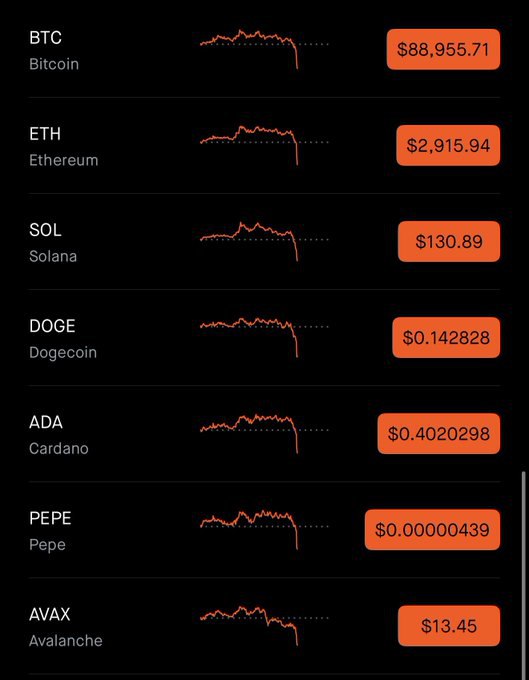
Now in 2025 we have had a Bitcoin and other cryptocurrency
crash, of sorts. Just a hint of what may be coming. But the
Zetas say during a time when the USD has slipped in comparative
value, Bitcoin and its brethren have their place.
- Bitcoin falls again after Weak
November as Bearish Sentiment Goes On
December 1, 2025
https://www.reuters.com/business/finance/bitcoin-falls-5-below-90000
- Bitcoin slumped on Monday, with
the world's largest cryptocurrency down about 6% and on
track for its biggest daily percentage fall since early
November, as risk aversion drove investors out of digital
and other assets.
- Cryptocurrency Craze
February 4, 2018
https://www.zetatalk.com/newsletr/issue592.htm
- The Bitcoin craze which started in
2009 has now spread to other, newer Cryptocurrencies, all
likewise unregulated.
- Crypto Downturn
https://poleshift.ning.com/profiles/blog/
- The crypto market suffered a sharp
downturn on December 1, 2025, with over $400 million in
liquidations occurring in just one hour. Bitcoin and other
major cryptocurrencies saw steep price drops, triggering
widespread concern across the market. Zetas, Right,
Again! What Happened in the Crypto Market? Bitcoin (BTC)
plunged below $87,000, erasing a week’s gains in a single
candle. It dropped nearly $4,000 in under two hours.
Ethereum (ETH) fell over 6%, landing around $2,828, while
Solana (SOL) and others also saw similar declines. The
total crypto market capitalization dropped to $2.92
trillion, down 5.26% in 24 hours. Liquidations exceeded
$400 million, primarily from long leveraged positions, as
traders were caught off guard by the sudden volatility.
- President Donald J. Trump
Establishes the Strategic Bitcoin Reserve and U.S. Digital
Asset Stockpile
March 6, 2025
https://www.whitehouse.gov/fact-sheets/2025/03/fact-sheet
- The Order creates a Strategic
Bitcoin Reserve that will treat bitcoin as a reserve
asset. The Strategic Bitcoin Reserve will be capitalized
with bitcoin owned by the Department of Treasury that was
forfeited as part of criminal or civil asset forfeiture
proceedings. The United States will not sell
bitcoin deposited into this Strategic Bitcoin Reserve,
which will be maintained as a store of reserve assets. The
Secretaries of Treasury and Commerce are authorized to
develop budget-neutral strategies for acquiring additional
bitcoin, provided that those strategies impose no
incremental costs on American taxpayers.
ZetaTalk Confirmation
12/4/2025: We
predicted when Bitcoin and other cryptocurrencies first
emerged that they would prove to be vulnerable
and thus ephemeral. Cryptocurrencies are not backed by
any country, thus the system can go poof with no
one held accountable. Unlike the USD, which the FDIC
guarantees up to $100,000 if a bank fails, or where a Plunge
Protection Team can calm a plunge, cryptocurrencies have no
brakes. They promise quick profits but also hold great risk.
But President Trump has
addressed the reality of Bitcoin and other cryptos with his
Strategic Bitcoin Reserve to hold any Bitcoin arriving as a
result of a civil suit. Where the USD or other currencies
might plunge in value to the extent that they are no longer
used as a medium of exchange, Bitcoin is likely to remain as a
link between Central Bank supported currencies and a frank
Barter System.
|